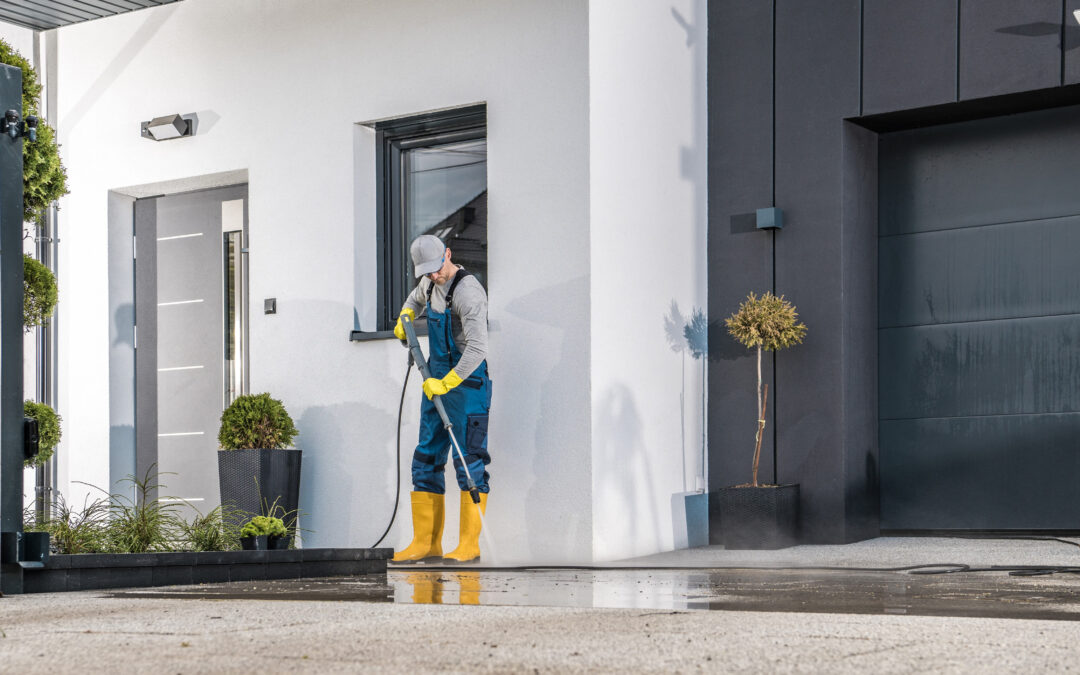
Concrete driveways gradually collect tire residue, ground-in soil, algae, leaf stains, oil, and airborne debris as vehicles, weather, and foot traffic move across the surface. Hiring a professional pressure washing service for concrete driveways gives property owners access to equipment and cleaning methods that can address buildup without treating every stain or slab the same way. Concrete walkways and decorative concrete may require separate techniques because texture, coating condition, age, previous repairs, and sealer can change how pavement reacts to water pressure.
- Concrete pores can hold soil and residue below the visible surface.
- Oil, algae, rust, and tire marks may require different treatments.
- Concrete walkways can have cleaning needs that differ from driveways.
- Decorative concrete should be evaluated before stronger pressure is applied.
Professional Concrete Pressure Washing
Trained crews usually inspect pavement before choosing equipment, nozzle distance, cleaning products, or treatment strength. A common field example involves testing a small section of a stained driveway, checking how the concrete responds, then adjusting the process before cleaning hundreds or thousands of square feet, which can prevent one poor setting from affecting the entire surface. The Concrete Network recommends testing an inconspicuous area because stamped, stained, coated, or aging concrete may react differently to pressure. JG’s Pressure Washing offers a useful perspective on local surface care, stating, “Being local means we understand the surfaces, weather, and common buildup that affect properties in this part of Louisiana.”
- Initial inspection can reveal worn sealers or surface deterioration.
- Test areas help establish a suitable cleaning approach.
- Cleaning equipment can be adjusted before the whole driveway is washed.
- Local weather conditions can influence the type of buildup found on pavement.
1. Deeper Concrete Cleaning
Driveway grime does not stay exclusively on top of a slab because concrete contains pores, joints, texture, cracks, and depressions where dirt can settle. Professional pressure washing combines water flow with controlled mechanical force to loosen residue that ordinary rinsing or sweeping may leave behind. Concrete Network cleaning guidance discusses equipment around 3,000 PSI and approximately 4 gallons per minute for many concrete-cleaning applications, though actual pressure should always reflect the condition of the surface. Surface-cleaning attachments can cover wide areas in consistent passes, while wand work reaches borders, corners, and expansion joints.
- Embedded dirt may resist ordinary hose rinsing.
- Surface cleaners can produce more uniform coverage across broad slabs.
- Edges often require separate attention.
- Pressure should be adjusted for the concrete being cleaned.
2. Better Stain Treatment
Oil, rust, tire residue, algae, leaf tannins, and food stains behave differently once they reach concrete, which is why simply increasing pressure is not always the right response. Concrete Network stain-removal guidance explains that cleaning chemicals can play an important role and identifies alkaline degreasers as one option for oil and grease contamination. A professional pressure washing service can pretreat a stain, provide appropriate dwell time, then wash away loosened residue instead of repeatedly concentrating water on one spot. Older stains that have migrated farther into the slab may still leave some discoloration after treatment.
- Oil stains may respond better after degreasing.
- Rust requires a treatment intended for mineral staining.
- Organic growth can call for another cleaning product.
- Deep contamination may not disappear completely.
3. Controlled Cleaning Pressure
More PSI does not automatically produce a better driveway, and excess force can create visible marks before an operator realizes damage is occurring. The Centers for Disease Control and Prevention warns that pressure washer spray can cause serious injuries, including wounds that may appear minor at first. Concrete also deserves controlled handling because holding a nozzle too close, lingering in one area, or selecting an aggressive tip can etch vulnerable pavement or leave cleaning lines. Professional pressure washing depends on balancing pressure, water flow, nozzle angle, distance, and movement rather than relying on machine power alone.
- Nozzle distance changes the force reaching the slab.
- Operator speed affects cleaning consistency.
- Weakened concrete can require less pressure.
- High-pressure equipment requires careful handling around people and property.
4. Cleaner Concrete Walkways
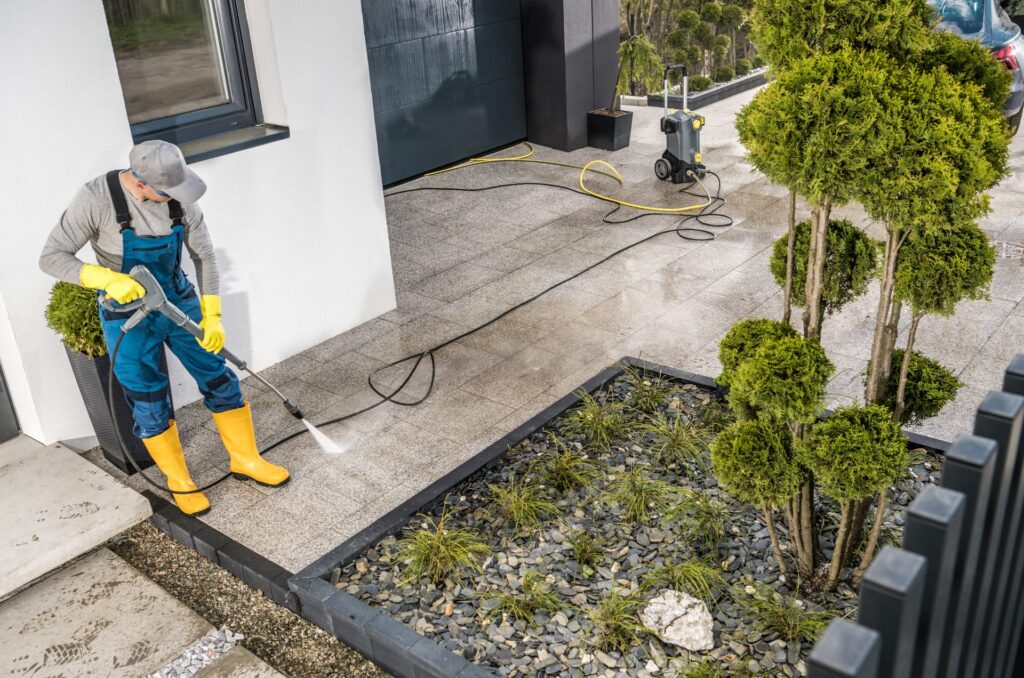
Concrete walkways often collect different contaminants because soil splash, irrigation, foot traffic, pollen, shade, landscaping, and roof runoff can affect them more than vehicle residue does. Pressure washing can remove accumulated grime while technicians work around steps, porch edges, planting beds, doorways, expansion joints, and nearby siding. Rinsing direction deserves attention because dirty runoff from one walkway section can flow onto pavement that has already been cleaned, creating extra work. Concrete walkways connected to a driveway can often be cleaned during the same service when their finish and structural condition are suitable.
- Walkways can accumulate mud from nearby planting beds.
- Shaded sections may stay damp longer and develop organic growth.
- Steps and borders require different spray angles.
- Runoff should be directed away from finished sections when possible.
- Nearby landscaping needs protection during cleaning.
5. Decorative Concrete Protection
Decorative concrete deserves a more measured approach because stamped patterns, exposed aggregate, color treatments, stains, and sealers can react differently from standard broom-finished pavement. Concrete Network maintenance guidance explains that cleaning and sealing frequency can vary based on sunlight, weather exposure, and the amount of vehicle or pedestrian traffic a surface receives. Professional pressure washing may be suitable for decorative concrete after the finish is inspected, but cleaning strength and equipment choice should account for the coating and texture already present. Worn sealer or fading color can become easier to identify once soil and surface growth are removed.
- Stamped patterns contain recesses where grime can collect.
- Exposed aggregate has a different texture from smooth pavement.
- Colored surfaces should be checked before stronger cleaning begins.
- Existing sealer condition can influence the washing method.
6. Faster Driveway Cleaning
Large concrete driveways can consume hours when they are cleaned using a small homeowner machine and a narrow spray pattern. A professional pressure washing service may use equipment with greater water flow along with surface-cleaning attachments that cover more square footage per pass, then switch to a wand for borders and joints. Organized hose placement, vehicle relocation, runoff planning, and stain pretreatment can further reduce wasted movement while the work proceeds. Business properties benefit from the same planning because entrances, parking areas, sidewalks, and customer routes may need to remain usable during portions of the service.
- Surface cleaners cover larger pavement sections in repeated passes.
- Edge work can be completed separately after open areas.
- Planned hose routes reduce interruptions during cleaning.
- Commercial properties can divide work into sections to preserve access.
7. Longer Concrete Care
Routine pressure washing can remove layers of grime before they become harder to distinguish from the original concrete surface, but cleaning should remain part of a broader maintenance plan. Concrete Network recommends periodic exterior concrete cleaning and explains that maintenance needs vary based on exposure and traffic. Pressure washing will not repair cracks, settlement, spalling, broken joints, or missing material, yet a cleaned driveway can make those defects easier to see and document. Property owners can then decide whether sealing, crack repair, drainage correction, or another type of maintenance deserves attention.
- Cleaning can expose cracks hidden beneath dark buildup.
- Spalling requires repair rather than stronger washing.
- Expansion joints can be inspected after debris is removed.
- Sealer wear may become more visible after cleaning.
- Drainage problems should be addressed separately from staining.
How Pressure Washing Cleans Concrete Driveways
A professional pressure washing service commonly begins with surface inspection, removal of loose debris, stain treatment, equipment setup, cleaning passes, border work, rinsing, and a review of the finished pavement. Wash-water direction is another consideration because runoff may carry dirt, detergent, oil residue, vegetation, or loosened material away from the driveway. EPA pavement-cleaning guidance discusses reducing water use and considering capture, filtration, or infiltration where wash water could carry pollutants. Local requirements still determine how wastewater should be handled at an individual home or business.
- Loose debris should be removed before equipment begins washing.
- Problem stains can receive pretreatment.
- Runoff routes should be identified during setup.
- Edges and expansion joints may need separate passes.
- Local wastewater requirements should be followed.
Concrete Cleaning Limits
Pressure washing improves surface cleanliness, but it cannot reverse every type of concrete damage or discoloration. Oil that penetrated far into the slab, internal rust staining, faded decorative color, deep cracks, scaling, or surface loss from spalling can remain after even careful cleaning. A professional pressure washing service should identify the difference between removable buildup and defects that require concrete repair or refinishing. Increasing pressure again and again on a permanent mark can damage the surrounding surface without solving the original issue.
- Deep oil staining may leave a visible shadow.
- Structural cracks need repair rather than cleaning.
- Missing surface material cannot be restored through pressure washing.
- Faded decorative treatments may require refinishing.
Professional Pressure Washing Value
The real value of professional pressure washing comes from matching the cleaning method to the pavement, stain, finish, and surrounding property rather than treating every concrete area identically. Concrete driveways may benefit from degreasing and broad surface-cleaner passes, concrete walkways may require tighter control near landscaping and entrances, and decorative concrete can call for reduced force around coatings or stamped textures. Equipment safety, runoff planning, stain chemistry, surface condition, and realistic expectations all shape the finished result. A thoughtful process leaves the property cleaner while helping owners identify damage that belongs in a separate maintenance plan.
- Surface condition should guide equipment selection.
- Stain type influences pretreatment choices.
- Decorative finishes deserve individual evaluation.
- Cleaning can reveal maintenance concerns that dirt previously hid.

Pressure Washing Key Takeaways
Professional pressure washing can remove dirt, organic growth, vehicle residue, and other buildup from concrete driveways, walkways, and suitable decorative surfaces when the method matches the pavement. The strongest service combines inspection, stain identification, controlled water pressure, suitable equipment, border work, runoff planning, and an understanding of what washing cannot repair. CDC safety guidance shows why high-pressure equipment requires careful handling, while concrete-maintenance guidance reinforces the need to inspect decorative and aging surfaces before aggressive cleaning. Homeowners and business owners gain the most when pressure washing is treated as one part of concrete maintenance rather than simply applying the highest available PSI.
- Concrete condition should guide pressure levels.
- Stains may require treatment before washing.
- Concrete walkways need attention around landscaping and runoff.
- Decorative concrete can require gentler methods.
- Structural damage belongs in a repair plan rather than a cleaning plan.
Pressure Washing FAQs
How Often Should Concrete Be Pressure Washed?
Cleaning frequency depends on vehicle traffic, shade, trees, rainfall, irrigation, drainage, and how quickly stains return. A driveway beneath heavy tree cover may develop organic staining faster than pavement exposed to more sun and airflow. Property owners can base the schedule on actual buildup instead of assuming every concrete surface needs cleaning at the same interval.
Can Pressure Washing Remove Oil?
Pressure washing can improve many oil stains, especially when the area receives appropriate pretreatment with a degreasing product. Oil that has soaked farther into porous concrete may remain visible after surface contamination is removed. Treating the stain before washing usually makes more sense than concentrating extreme pressure on one spot.
Is Pressure Washing Concrete Safe?
Pressure washing can be appropriate for concrete when the pavement’s age, condition, finish, equipment settings, and cleaning technique are considered first. The CDC warns that high-pressure water can cause serious injuries, which also makes operator control an important part of the service. Deteriorated, coated, stamped, or weakened surfaces may require another method or reduced cleaning force.
Can Concrete Walkways Be Cleaned?
Concrete walkways can often be pressure washed during the same service as a driveway when their condition allows it. Technicians need to account for stairs, landscaping, entry doors, expansion joints, siding, and the direction wash water will travel. Walkways with decorative finishes or surface deterioration may need altered settings.
Can Decorative Concrete Be Pressure Washed?
Decorative concrete can often be cleaned, but stamped patterns, exposed aggregate, colored finishes, stains, and sealers should be evaluated before work begins. Concrete Network recommends testing sensitive or treated surfaces because their response to cleaning can differ from standard pavement. Lower pressure, additional pretreatment, increased nozzle distance, or another cleaning method may provide a better approach for some finishes.