
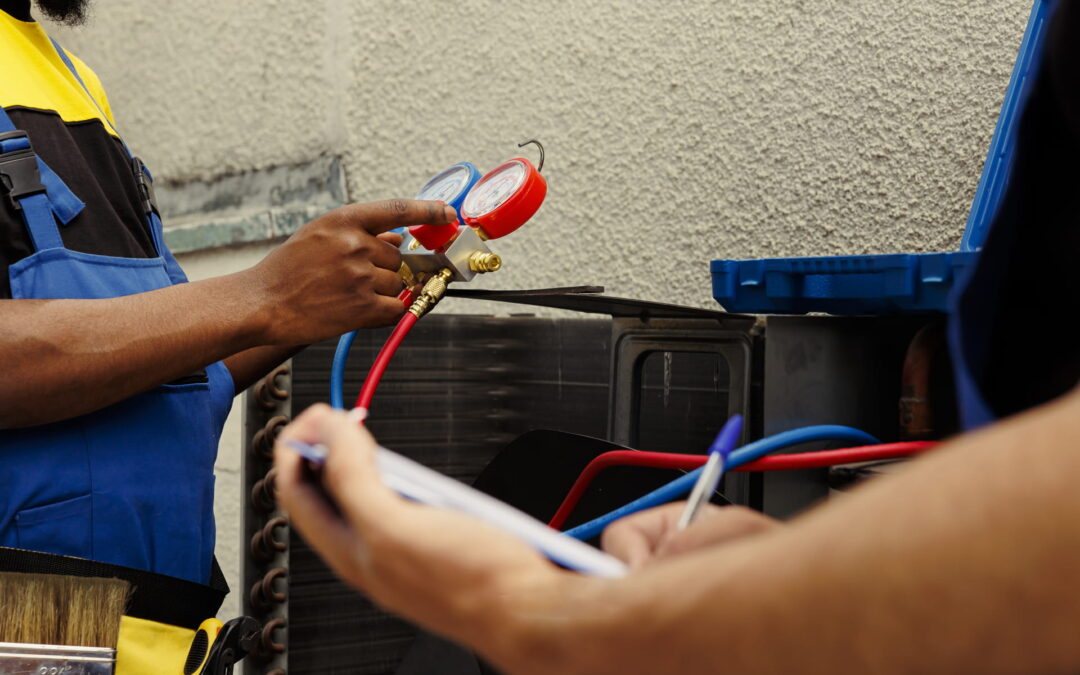
1. Grimy Coils Reduce Cooling Efficiency
Dirt, pet hair, and outdoor debris cling to evaporator and condenser coils over time. Heat cannot release properly when coils are coated, so the system runs longer just to maintain the thermostat setting. The U.S. Department of Energy notes that heavily clogged coils can reduce efficiency by close to 30%. Continued buildup may even lead to ice formation and compressor stress. Professional cleaning restores airflow, improves heat transfer, and can lower energy use by up to 20%.
2. Clogged Air Filters Restrict Airflow
Air filters packed with dust and allergens force the blower motor to work harder to circulate air. Reduced airflow increases strain on internal components and pushes electricity usage higher, sometimes by 15% or more. Technicians often find filters so blocked that airflow nearly stops. Replacing filters every one to three months keeps the system operating smoothly and protects indoor air quality.
3. Refrigerant Leaks Lower Performance
Small refrigerant leaks gradually reduce cooling capacity. The system compensates by running longer cycles, using more energy while struggling to reach the desired temperature. Unchecked leaks can damage the compressor, one of the costliest parts to replace. Certified A/C technicians ensure proper leak detection, safe refrigerant handling, and restored cooling performance.
4. Worn Capacitors Trigger Short Cycling
Capacitors provide the electrical surge needed to start motors and compressors. Aging or failing capacitors may cause short cycling, where the unit turns on and off repeatedly. Rapid cycling wastes electricity and accelerates wear on major components. Routine maintenance identifies failing capacitors early, preventing overheating and unnecessary breakdowns.
5. Blocked Condenser Units Cause Overheating
Outdoor condenser units require open space to release heat effectively. Bushes, fencing, and yard debris can trap heat around the unit, forcing longer and hotter operating cycles. The U.S. Department of Energy recommends maintaining at least two feet of clearance around the condenser. Keeping the area clean helps the system run efficiently during peak summer heat.
6. Leaky Ductwork Wastes Conditioned Air
Cracks and gaps in ductwork allow cooled air to escape into attics or crawl spaces. Energy Star estimates that duct leaks can waste up to 30% of conditioned air output. Sealing ducts restores balanced airflow, improves indoor comfort, and lowers overall power consumption.
7. Faulty Thermostats Create Constant Cycles
Malfunctioning thermostats misread indoor temperatures, keeping the system running longer than necessary. Poor placement near windows or heat sources can also cause inaccurate readings. Installing a programmable thermostat improves temperature control and may reduce annual energy use by up to 10%, according to the U.S. Department of Energy.
Why Timely A/C Repair Matters
Minor mechanical issues often escalate inside an air conditioning system. Airflow restrictions, electrical wear, and refrigerant problems increase strain on the compressor and inflate monthly utility bills. Routine inspections and prompt A/C repair help extend equipment lifespan, improve efficiency, and prevent costly emergency replacements. Addressing concerns early keeps cooling performance steady and energy expenses predictable.
FAQ About A/C Repair for Energy Loss
What happens if dirty coils are ignored?
Heat remains trapped in the system, forcing longer cycles and raising energy consumption. Ongoing strain may eventually damage the compressor.
Why are duct leaks expensive?
Cooled air escapes before reaching living spaces, causing the system to run longer. That wasted output directly increases monthly energy costs.
How do failing capacitors impact performance?
Weak capacitors lead to short cycling and excess electrical draw. Continued operation under those conditions can damage motors and compressors.
How often should the condenser area be cleared?
Seasonal checks, especially after storms, help maintain proper airflow and prevent overheating during heavy usage months.
Why upgrade an older thermostat?
Outdated thermostats often misread temperatures and trigger unnecessary run times. Modern programmable models allow more precise control and improved efficiency.